


Something happens at almost every show we do.
Someone tries on CraftOptics for the first time, looks down at their work, and just… stops. Sometimes they laugh. Sometimes they say “wow” a few times. And almost every time, they say some version of the same thing:
“I had no idea how much I was missing.”
Sometimes they say it quietly, sometimes loud enough to turn heads. But almost everyone says the same first word: “Wow.”
That’s actually how we named our best selling product, the WOW Package. Because after hearing it a few thousand times, it seemed like the best thing to call it.
I’ve been thinking a lot about why that moment hits people so hard. And I think it comes down to something most makers never consider: the connection between seeing clearly and getting into flow state.
What Is Flow State, and Why Do Makers Know It So Well?
If you’ve ever sat down to work on a piece and looked up two hours later wondering where the time went, you’ve experienced flow state. Psychologists describe it as the mental zone where your brain is focused enough to feel deeply satisfying but not so overwhelmed that it becomes stressful.
Research links regular flow experiences to lower anxiety, lower stress, and greater life satisfaction. And detail work — jewelry making, quilting, needlework, metalsmithing — is one of the most reliable ways to get there. You probably already know that because you’ve experienced it yourself.
When you’re in a flow state, your brain enters a unique condition where the prefrontal cortex, the part of the brain responsible for self-criticism, decision-making, and time awareness, temporarily quiets down. At the same time, your brain releases dopamine, norepinephrine, and endorphins — chemicals that enhance motivation, increase focus, and boost your overall sense of enjoyment.
In other words, flow state isn’t just pleasant. It’s one of the best things your brain can do.
The Three Things Flow State Requires
Here’s where it gets interesting for makers. Flow state doesn’t happen automatically. It’s more about creating the right circumstances than forcing it. Researchers have identified three conditions your brain needs to get there:
The first is clear goals. Your brain needs to know what it’s working toward.
The second is the right challenge-to-skill balance. Too easy and you get bored. Too hard and you get anxious. Flow happens in the sweet spot between the two.
The third — and this is the one that stopped me when I first read it — is immediate feedback. Your brain needs to see the results of what it’s doing, continuously, to stay locked in flow state.
That last one changes everything for makers.
The Quiet Thing That Blocks Your Flow
Think about what immediate feedback means in your work. You make a cut and you see the line. You lay a stitch and you see the result. You set a stone and you see how it sits. That continuous loop of action and visible result is exactly what keeps your brain absorbed and engaged.
But what happens when you can’t clearly see that feedback?
Part of your brain is still working — straining, squinting, compensating — even while the rest of you is trying to create. That low-level friction is enough to keep you just outside the absorbed, satisfying state you’re reaching for.
It doesn’t announce itself as a vision problem. It just feels like the work is a little harder than it used to be. You finish sessions more tired than you’d like. The detail work that once felt effortless now feels like effort.
For many makers, they don’t even realize something is getting in the way. They assume it’s just part of getting older, or that they need better lighting, or that they’ve simply lost some patience for the finer details.
What Happens When Clarity Is Restored
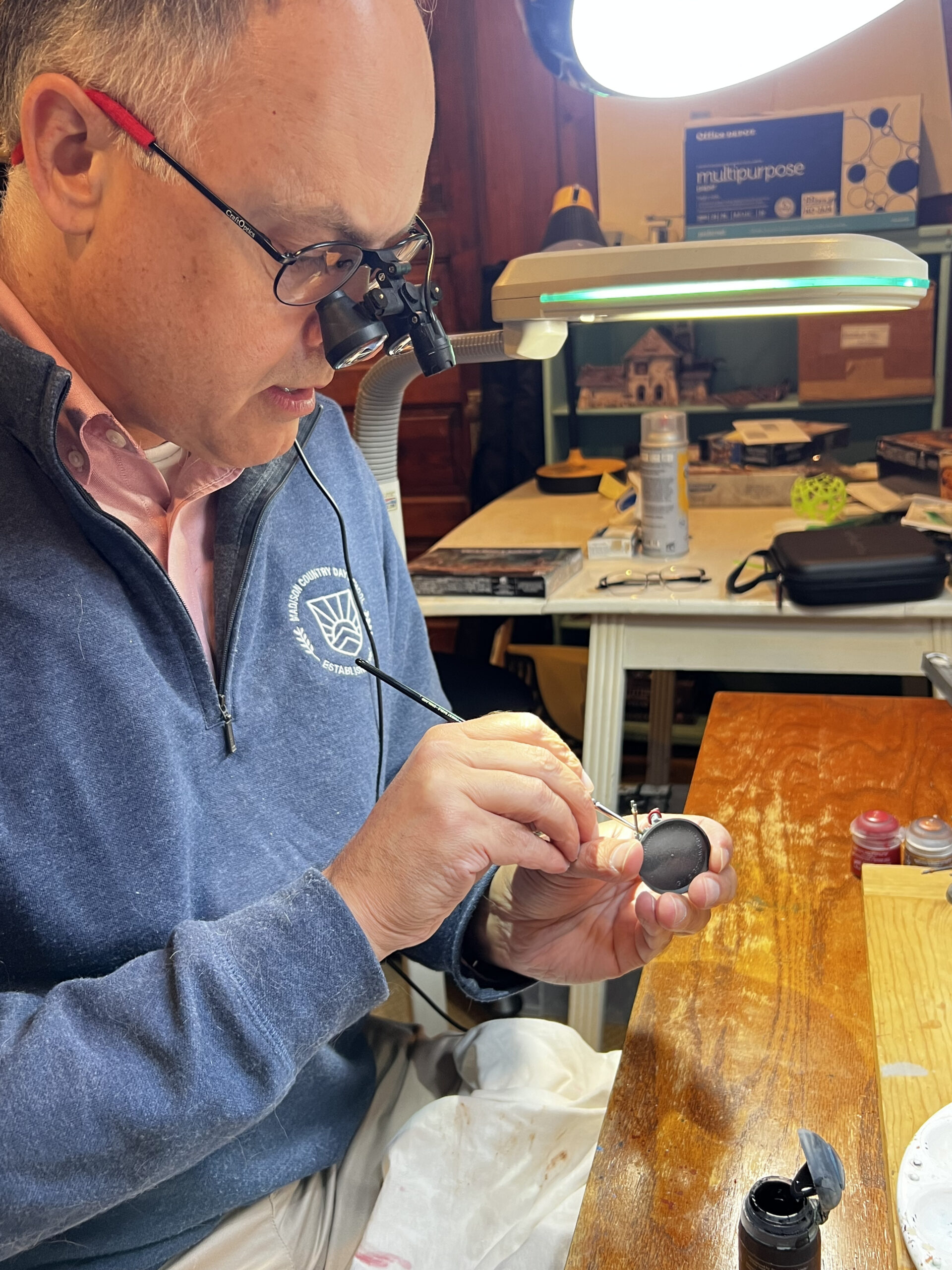
When the right magnification and light clicks into place, something shifts quickly. The straining stops. The compensating stops. You stop managing your vision and just start creating.
That’s the moment we see at shows. The “wow” isn’t just about seeing more clearly — it’s about feeling the friction disappear and recognizing, often for the first time, how much energy was quietly being spent just trying to see.
With magnified visual precision, great shadowless light and a comfortable working position, it’s easy to get lost in your work — which is exactly where every maker wants to be.
A Note From Jeff
I started CraftOptics with my father because we kept hearing the same story from makers. Not “I can’t see my work” — just that quiet sense that something was off, that the work they loved had become a little harder than it used to be.
After helping thousands of creators since 2009, I’m convinced that for many makers, visual clarity is the single most overlooked factor in the quality and enjoyment of their creative sessions.
If any of this resonates with you, I’d encourage you to take a look at CraftOptics. And as always, shoot us an email, or give us a call at 888 444 7728. We’re happy to help you figure out if CraftOptics is the right fit.
Take care, Jeff
We help creators see clearly. / Magnifying eyeglasses and brilliant light that change the way you work.